

Read more Blasts from the Past >>
Hang on to your straw hats and baseball caps. Andi is going to take you on a tour of the history of one of our (and her) favorite part of the Fourth of July-fireworks!
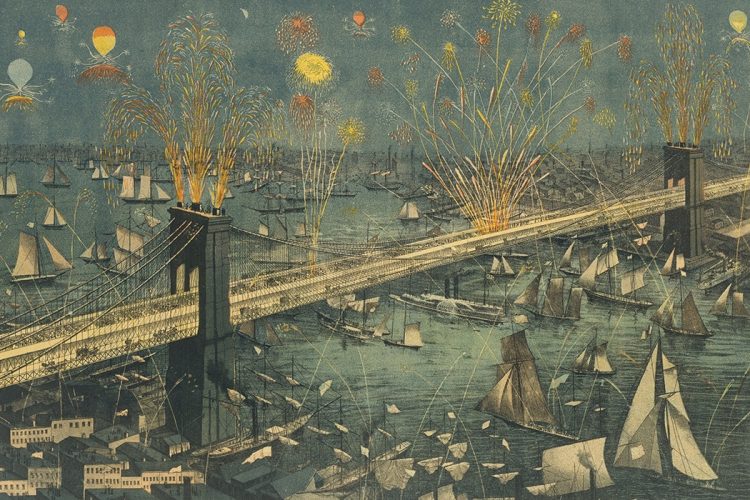
For those who might be wondering if Andi and her family were able to enjoy a fireworks display in the 1800s, the answer is a resounding yes. And the louder the better. This image is the Brooklyn Bridge (New York City) on July 4, 1883, a year before the setting of The Last Ride. Daniel tells Andi all about the building of the new bridge. All kinds of fireworks are going off. Below this image is another. Those New Yorkers really know how to throw a fireworks party!

Where Did It All Begin?
Andi and I are glad you asked! Choose the right answer. Fireworks were first invented in China in . . .
- A. 200 B.C.
- B. 800 AD
- C. 1200 AD
If you chose “A,” you are right. Back in 200 B.C., while the Romans were constructing roads and aqueducts all over their Empire, the Chinese were busily trying to discover the secret to immortality (eternal life). They tossed a bunch of bamboo stalks into a fire. I am not sure how this would help them attain eternal life, but it did show them something they did not expect. The bamboos exploded with a loud bang, and fireworks were born (by accident).
It took another 1,000 years until some bright Chinese chemist (800 AD) mixed together sulfur, charcoal, and potassium nitrate (a food preservative), again hoping to somehow find the “secret” to eternal life. (He did not realize that Jesus Christ had shared the “secret” of eternal life 800 years earlier in a small country called Judea.) At any rate, the Chinese chemist found no eternal life. Instead, his mixture caught on fire! And wow! The guy had accidentally invented black power (gun powder), which changed the way wars were fought from then on, eventually all over the world. No more javelins, spears, or swords. Instead, guns and cannons. (But all of that comes many hundreds of years later.) Now, back to fireworks . . .
It did not take long for the Chinese to pack this black powder into the bamboo stems (or paper tubes, since the Chinese also had paper, while the Romans were still messing with clay tablets). They lit a fuse and the bamboo (or paper) tubes exploded with a very satisfactory BOOM (way better than bamboo stems by themselves).
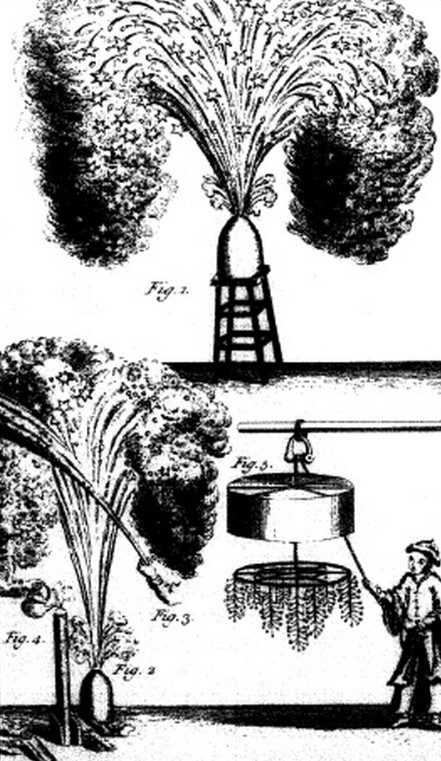
While the “boom” was great, the colors were not. As in . . . these early fireworks had no color or only orange. What did the Chinese use these exploding tubes for? The paper ones were used to scare off evil spirits and to celebrate weddings or a new baby. They stuffed them full and tossed them into the fire. Bang! That’s it. A fireworks show back then was just a bunch of noisy explosions. However, it didn’t take long (maybe a couple hundred years), to go beyond just a noisy bang in the fire. They shot the fireworks UP and turned them into exciting “aerial” displays.

Enter the Europeans
Around this time (1200 – 1600 AD), western missionaries, explorers, and diplomats started visiting China. They liked this new powder that could blow things up (especially in a war) or entertain folks with a noisy display and a pretty orange color. These fireworks celebrations were run by “green” men. Why green, when the fireworks were orange? They wore lots of green leaves to protect themselves from sparks (they did not want to get burned). This was a very dangerous job. Many were killed when their fireworks were lit and went “bad” unexpectedly.
Everybody in Europe loved fireworks! Different countries competed with each other for the best show. In England, King James II’s “firemaster” was awarded knighthood for his excellent work. Then the American Colonies got into the act and loved fireworks too! They loved them so much that on July 4, 1777 (one year after signing the Declaration of Independence), John Adams (our second president eventually), wrote this letter to his wife:
“This day will be most memorable in the history of America, I am apt to believe that it will be celebrated by succeeding generations as the great anniversary festival… It ought to be solemnized with pomp and parade… bonfires and illuminations [fireworks]… from one end of this content [continent?] to the other, from this time forward forevermore.”
Guess what! John Adams was right. For over two hundred years, the fourth of July has been celebrated with fireworks and all that other fun stuff. Unfortunately, the celebrating colonists only saw ORANGE fireworks. That was the only color they came in back then. Orange, orange, and more orange. But at least they blew up with nice, loud bangs.
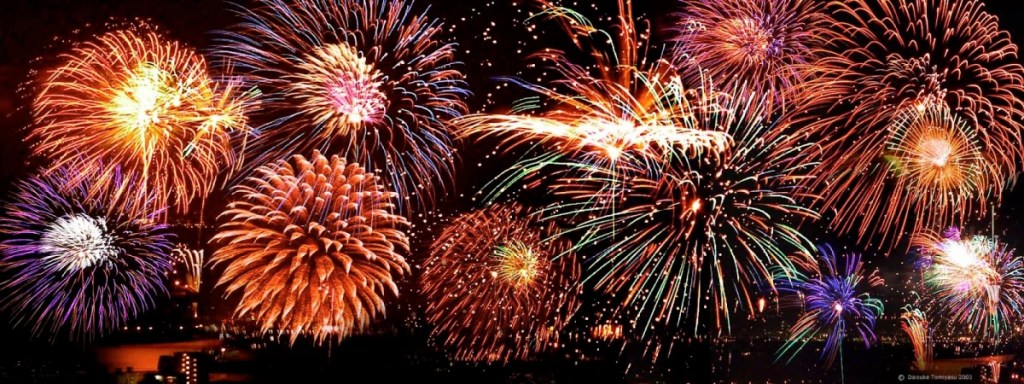
Sixty years later, the Italians, not to be outdone by the Chinese, invented all the colors we see today–red, yellow, blue, purple, yellow (and orange, or course). They figured out if you add certain metals like strontium or barium to the mixture of black power, whoosh! You get magnificent colors when the power burns.

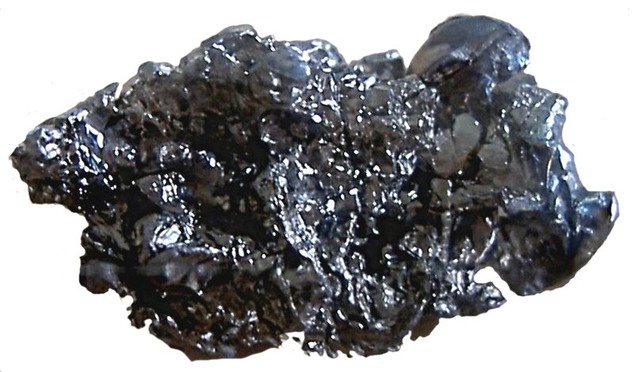
These ugly metals, when burned, give your fireworks beauty!

 Andi Carter's Blog
This is so cool! Happy Independence Day everyone!!
LikeLike
Neat! Our little city across the valley from us does fireworks on the mesa every year. One of my favorite parts of the performance is when the fire dept. lights the hill on fire. (accidently, of course!) They do it pretty consistently! 😉
LikeLiked by 1 person
Happy Independence Day everyone!!!
LikeLike
Thanks Mrs. Marlow! Love all the history!
Happy Independence Day, y’all! 🎆🎇🧨🎉🥳🎊🇺🇸🇺🇸🇺🇸🇺🇸🇺🇸
LikeLike
Happy 4th of Julyy!!!
LikeLike
So neat! I love fireworks!
Happy Fourth of July y’all!!!!
LikeLike
that’s so neat!! Thanks so much Mrs. M!!
Happy Fourth of July y’all!!! Wish I could be there (the USA) celebrating it with you! ❤️ My family and I are missionaries in Belize and, well, they don’t celebrate the 4th like we do 😂😂
LikeLiked by 3 people
Oh wow! That is so cool! Happy 4th of July y’all!
LikeLike
Are you posting today?
LikeLike
I posted yesterday instead
LikeLike
ok, cool.
LikeLike
This is super neat!!! Interesting facts!!
LikeLike